How Can Seagulls Damage Commercial Roofs, HVAC Equipment, and Building Surfaces?
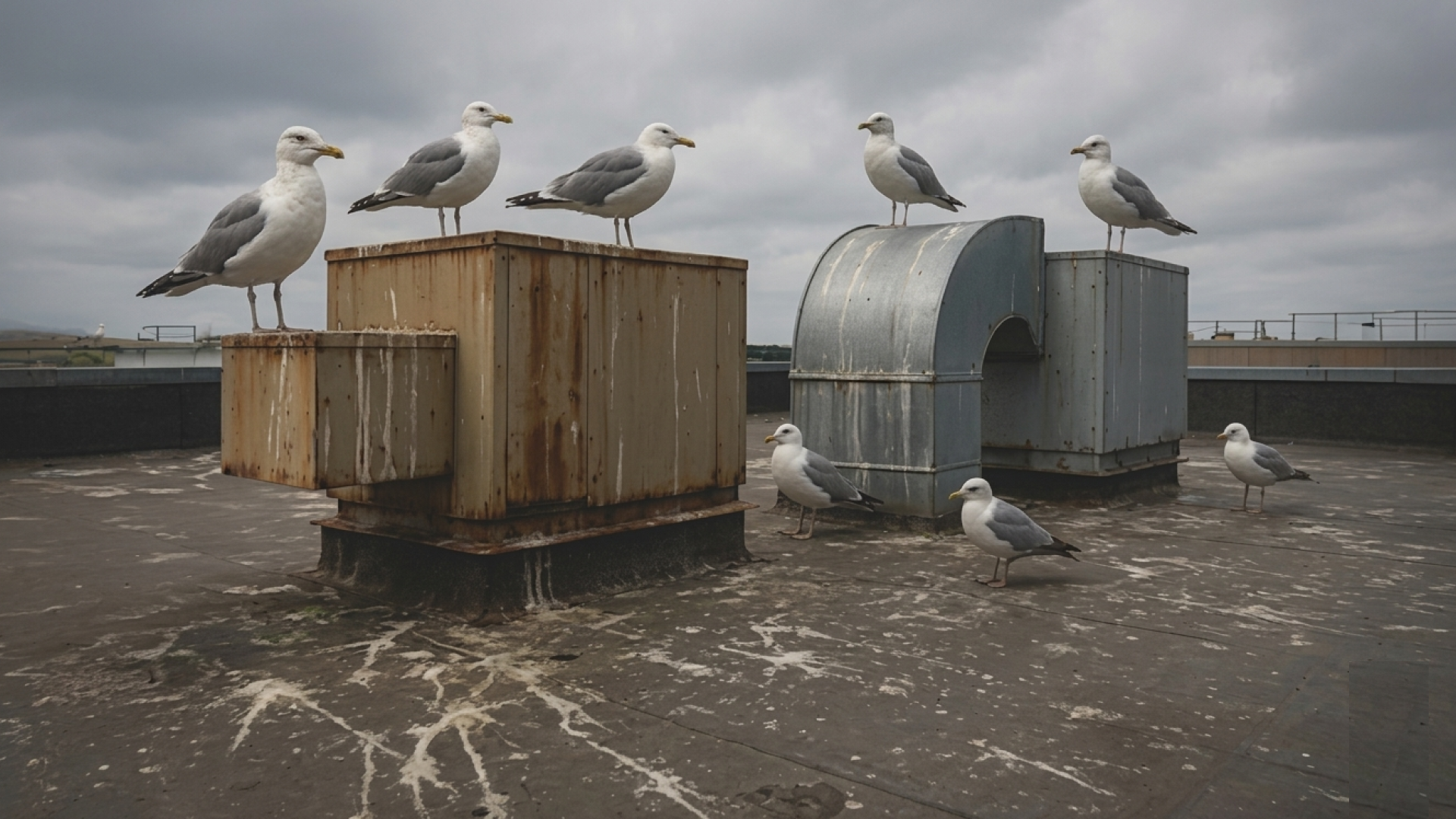
Seagulls may look harmless when they gather around a commercial property, but a large or persistent gull population can create real maintenance problems. Repeated nesting, roosting, droppings, and feeding activity can affect rooftops, HVAC equipment, exterior walls, signs, walkways, solar panels, and other building surfaces.
The damage is not always obvious at first. A few birds on a roof may seem like a minor nuisance. Over time, however, repeated bird activity can leave behind layers of guano, nesting materials, feathers, food waste, and debris. These conditions can contribute to blocked drains, contaminated surfaces, unpleasant odors, corrosion concerns, equipment maintenance issues, and difficult cleanup.
Commercial properties can be particularly vulnerable because flat roofs, rooftop equipment, parapets, loading areas, warehouses, restaurants, and waste facilities can provide attractive places for gulls to rest or nest.
Understanding how seagulls affect buildings is the first step toward preventing recurring problems. Professional seagull control focuses on reducing access to preferred areas while using humane deterrent methods designed around the property, the bird behavior involved, and the areas that need protection.
Why Do Seagulls Gather on Commercial Buildings?
Seagulls are adaptable birds that can take advantage of environments where food, water, shelter, and elevated resting areas are available.
Commercial properties often provide several of these conditions at the same time. Flat rooftops create open spaces for resting, while rooftop equipment, parapets, ledges, and mechanical structures can provide protected areas for birds to gather.
Restaurants, shopping centers, warehouses, waste facilities, marinas, docks, and industrial properties may also have nearby food sources or waste that attracts gulls.
Commercial Roofs Provide Attractive Roosting Areas
A flat commercial roof can function like an elevated open field from a gull's perspective. It may be relatively undisturbed, offer good visibility, and provide access to nearby food or water.
Once gulls become accustomed to a property, repeated visits can turn into a persistent roosting or nesting problem.
Food Waste Can Increase Bird Activity
Accessible garbage, dumpsters, outdoor food areas, and improperly managed waste can encourage gulls to remain near a property.
This does not mean food waste is always the only reason birds are present. Once gulls establish a regular pattern of using a building, simply removing one food source may not eliminate the problem.
Nesting Can Make the Problem More Difficult
Nesting behavior can result in birds repeatedly returning to specific rooftop locations. Nesting materials may accumulate around drains, equipment, corners, and sheltered areas.
For property owners, this creates a maintenance issue as well as a bird-management challenge.
How Can Seagulls Damage Commercial Roofs?
Seagulls can affect commercial roofing systems through droppings, nesting materials, debris accumulation, repeated bird activity, and blocked drainage areas.
Not every roof will experience the same type or degree of damage. The condition depends on the roofing material, building design, bird population, maintenance practices, and how long the problem has been present.
Bird Droppings Can Build Up on Roofing Surfaces
Guano can accumulate quickly in areas where gulls regularly rest. Heavy buildup can create unsanitary conditions and make roof maintenance more difficult.
Bird droppings may also contain organic material and can create persistent odors. On frequently used commercial properties, accumulated droppings can become a recurring cleaning concern.
Nesting Materials Can Block Roof Drains
Gulls may collect vegetation, twigs, trash, feathers, and other materials when building nests.
If these materials accumulate around roof drains or drainage channels, they can interfere with normal water flow. Blocked drainage can contribute to standing water after rain, increasing the maintenance burden on the roofing system.
Why Roof Drainage Matters
Commercial roofs depend on proper drainage to move rainwater away from the building.
A bird-related blockage may not appear serious during dry weather. After heavy rainfall, however, the same obstruction can become much more noticeable.
Routine roof inspections should include drainage areas, especially on properties with recurring gull activity.
Nesting Can Create Maintenance Problems Around Roof Equipment
Roof-mounted equipment often creates sheltered spaces that birds may use for resting or nesting.
These areas can be difficult for maintenance crews to access safely. Removing accumulated nesting materials may also require additional cleaning and inspection.
A preventive bird-control strategy can reduce the amount of recurring material that needs to be removed.
How Can Seagulls Affect HVAC Equipment?
HVAC systems are among the most important pieces of equipment on many commercial rooftops. Gulls do not need to physically break an air-conditioning unit to create problems around it.
Their activity can create maintenance challenges through droppings, nesting materials, feathers, debris, and repeated access to equipment areas.
Droppings Can Contaminate Equipment Surfaces
Bird droppings can accumulate on HVAC housings, nearby surfaces, platforms, and other rooftop equipment.
Heavy contamination can make cleaning more difficult and may increase the frequency of maintenance required around affected equipment.
Technicians may also need to clean surrounding areas before performing certain maintenance tasks.
Nesting Materials Can Accumulate Near Equipment
Protected gaps and sheltered spaces around rooftop equipment can become attractive nesting locations.
Nesting debris may include sticks, leaves, grass, feathers, and other materials. If debris accumulates near ventilation or mechanical components, it can create an additional inspection and maintenance concern.
Bird Activity Can Complicate HVAC Maintenance
Technicians need safe access to rooftop equipment. Persistent bird activity can make certain work areas unpleasant or difficult to maintain.
A property with recurring gull problems may benefit from addressing bird access before the issue becomes a routine maintenance problem.
How Can Seagulls Damage Building Surfaces?
The effects of gull activity are not limited to rooftops. Building exteriors can also be affected by repeated droppings and roosting.
Commonly affected areas include:
Exterior walls
Ledges
Parapets
Windows and window frames
Doorways
Signs
Railings
Loading areas
Walkways
Outdoor seating areas
Rooftop structures
Guano Can Create Persistent Staining
Bird droppings can leave visible stains on building materials.
On light-colored walls, signs, concrete, stone, and other exterior surfaces, repeated contamination can make the property look poorly maintained even when other parts of the building are properly cared for.
Regular cleaning can remove existing contamination, but cleaning alone may not prevent birds from returning.
Repeated Cleaning Can Increase Maintenance Costs
A property experiencing recurring bird activity may need frequent washing, sanitizing, surface cleaning, and debris removal.
The issue is not simply the cost of one cleanup. Repeated service requirements can consume staff time and maintenance resources.
A prevention-focused approach attempts to address why birds continue using the same areas.
Guano Can Create Slip and Sanitation Concerns
Accumulated bird droppings can make walkways, stairs, loading areas, and other frequently used surfaces difficult to keep clean.
Commercial properties with outdoor dining, public entrances, or employee access points may need to pay particular attention to areas where people and birds regularly overlap.
What Parts of a Commercial Property Are Most Vulnerable?
Gull activity can affect different parts of a property depending on building design and surrounding conditions.
Common problem areas include:
Rootops: Flat roofs, parapets, rooftop structures, and mechanical areas can provide attractive resting and nesting locations.
HVAC Equipment: Roof-mounted air-conditioning units and mechanical equipment can collect droppings and nesting debris when gulls repeatedly gather nearby.
Solar Panels: Solar arrays can provide elevated surfaces where birds may perch or rest. Droppings can also accumulate on panel surfaces, creating a recurring cleaning concern.
Docks and Piers: Properties near coastlines, lakes, rivers, marinas, and other water environments may experience significant gull activity around docks and piers.
Warehouses and Industrial Buildings: Large roofs, loading areas, waste zones, and elevated structures can provide multiple locations for birds to gather.
Outdoor Dining Areas: Restaurants and hospitality properties may face both sanitation and customer-experience concerns when gulls repeatedly approach outdoor dining areas.
Waste Facilities: Food waste and other accessible materials can attract birds. Facilities managing substantial waste may need a broader bird-control strategy that addresses both attraction points and preferred roosting areas.
Can Seagull Droppings Damage Building Materials?
Bird droppings contain organic compounds and can be difficult to remove once they dry and accumulate.
The effect on a particular building material depends on factors such as exposure, surface type, cleaning practices, environmental conditions, and the amount of contamination.
Property owners should avoid assuming that every stain or surface deterioration problem is caused by bird droppings. Roof and building inspections should identify the actual source of damage before repairs are planned.
Why Early Cleanup Matters
Fresh contamination is generally easier to manage than layers of dried material that have accumulated over time.
Regular inspections can help property managers identify:
New nesting activity
Accumulating guano
Blocked drains
Bird access points
Debris around HVAC equipment
Repeated roosting locations
Areas requiring additional protection
Early intervention can help prevent a manageable bird problem from becoming a larger recurring maintenance issue.
How Do Professional Seagull Deterrent Systems Help?
Professional seagull control generally begins with understanding how birds are using a property.
Instead of treating every building the same way, a site assessment can identify where birds land, where they nest, what attracts them, and which surfaces require protection.
Step 1: Identify Bird Activity
The first step is determining where gulls are spending time.
This may include rooftops, parapets, HVAC equipment, solar panels, signs, loading areas, docks, waste areas, or outdoor seating.
Step 2: Identify Attraction and Access Points
A professional assessment considers conditions that may encourage repeated bird activity.
Potential factors include accessible food, waste, water, sheltered nesting locations, roof configuration, ledges, and other areas birds can comfortably use.
Step 3: Choose Appropriate Deterrent Methods
Different properties require different approaches.
Depending on the site, professional bird-control systems may use physical exclusion, deterrent barriers, specialized lines or wires, netting, protected zones, or other humane methods designed to discourage birds from using targeted areas.
The goal is to make protected locations less attractive or less accessible without intentionally harming the birds.
Step 4: Protect High-Risk Areas
Not every square foot of a property necessarily requires the same treatment.
A customized plan may prioritize rooftop equipment, nesting locations, solar arrays, drainage areas, building ledges, docks, or other high-activity zones.
Step 5: Monitor and Maintain the System
Bird behavior and property conditions can change.
Construction, new equipment, changes to waste management, nearby food sources, or changes in bird activity can create new access points. Periodic inspection helps identify areas that may need adjustment.
Humane Seagull Control: What Does It Mean?
Humane bird control is designed to discourage birds from using specific areas rather than intentionally injuring them.
A responsible approach considers both the property owner's needs and wildlife considerations.
Property owners should also understand that bird-protection rules can vary by species, location, and circumstance in the United States and Canada. Before removing nests, relocating birds, or taking other direct action, property managers should verify applicable federal, provincial, state, or local requirements and use qualified professionals when necessary.
Common Misconceptions About Seagull Deterrents
One misconception is that simply removing visible birds will permanently solve the problem.
If the property remains attractive to gulls, birds may return.
Another misconception is that one deterrent works equally well on every building. Roof design, bird behavior, surrounding food sources, and the type of protected area all affect which approach is appropriate.
A third misconception is that cleaning is enough. Cleaning addresses existing contamination, while deterrence addresses continued access.
How Can Property Owners Prevent Recurring Seagull Problems?
Effective bird management usually works best as a combination of prevention, maintenance, and deterrence.
Property managers can take practical steps such as:
Inspect rooftops and building surfaces regularly.
Keep dumpsters and waste areas properly managed.
Remove accessible food waste promptly.
Check roof drains for nesting materials and debris.
Inspect HVAC equipment for bird activity.
Monitor solar panels and rooftop structures.
Identify recurring roosting locations.
Clean contaminated areas using appropriate procedures.
Address bird access rather than relying only on repeated cleaning.
Consider professional deterrent systems when activity becomes persistent.
The right approach depends on the property. A warehouse near a waste facility may have different bird pressures than a waterfront restaurant, apartment complex, marina, or shopping center.
Why Prevention Is Often More Practical Than Repeated Cleanup
Cleaning removes the evidence of bird activity, but it does not necessarily change bird behavior.
If gulls continue to use the same roof or ledge, the cycle can repeat: Bird activity -> droppings and nesting -> cleanup -> birds return -> additional cleanup.
A preventive strategy attempts to interrupt that cycle.
By identifying preferred landing, roosting, and nesting locations, property owners can focus deterrent measures where they are most needed. This can make bird management more systematic rather than relying entirely on repeated reactive cleaning.
What Should Commercial Property Owners Do About Seagull Damage?
A recurring gull problem should be treated as a property-management issue rather than simply an occasional nuisance.
Start by documenting where birds gather and which areas show signs of contamination or nesting. Look for patterns. Are birds concentrated around rooftop HVAC equipment? Are they repeatedly landing on a parapet? Are drains becoming blocked? Are outdoor dining areas being affected?
That information can help determine the scope of the problem.
For larger or persistent infestations, a professional site assessment can provide a clearer picture of bird behavior, vulnerable areas, existing access points, and appropriate deterrent options.
Conclusion
Seagulls can affect commercial properties in several ways, from accumulated droppings and nesting debris to blocked roof drains, contaminated surfaces, and maintenance problems around HVAC equipment and other rooftop structures.
The impact is often gradual. A property may not experience obvious damage from a few birds, but repeated roosting and nesting can create a cycle of contamination, cleaning, inspection, and maintenance.
The most practical approach is to identify where birds are gathering, understand why those areas are attractive, maintain affected surfaces, and use appropriately designed humane deterrent systems where recurring access needs to be controlled.
For commercial and residential properties dealing with persistent gull activity, a customized site assessment can help determine which areas need protection and which deterrent approach fits the building.
Frequently Asked Questions
What is the most effective way to keep seagulls off commercial roofs?
The appropriate method depends on the roof design, bird behavior, nesting activity, and surrounding environment. Professional bird-control systems can combine physical deterrents and exclusion methods to make specific rooftop areas less attractive or accessible to gulls.
How do professional seagull deterrent systems prevent nesting and roosting?
Professional systems are designed to interfere with the areas birds use for landing, resting, or nesting. Depending on the property, solutions may include specialized barriers, netting, lines, wires, or other physical deterrents selected after assessing the site.
Are seagull deterrent systems safe, humane, and legal in the USA and Canada?
Humane deterrent systems are designed to discourage birds without intentionally harming them. Wildlife protection requirements vary by species and location, so property owners should confirm applicable federal, state, provincial, and local rules before disturbing nests or birds, ensuring methods remain safe and humane.
How can seagulls damage commercial roofs, HVAC equipment, and building surfaces?
Seagulls can leave droppings and nesting debris on roofs, HVAC equipment, walls, ledges, signs, walkways, and other surfaces. Nesting materials can also accumulate around drainage areas, while repeated contamination can increase cleaning and maintenance requirements.
How can property owners protect solar panels from seagull damage and droppings?
Solar panels can be protected by addressing areas where gulls perch or gather near the array. A site-specific deterrent system can help reduce bird access, while routine inspection and appropriate cleaning can address existing droppings and debris.
What are the best seagull control solutions for docks, piers, marinas, and boats?
The right solution depends on the structure, bird activity, and surrounding environment. Professional assessments may identify opportunities for physical deterrents or exclusion systems that discourage gulls from repeatedly landing, roosting, or nesting on protected areas.
How long do professional seagull deterrent systems typically last?
System lifespan varies according to the type of deterrent, installation conditions, weather exposure, building design, and maintenance. Regular inspections can help identify wear, damage, or areas that need adjustment as property conditions change.
Can professional seagull control prevent birds from returning to the same property?
Deterrent systems are intended to discourage birds from repeatedly using protected areas, but no responsible bird-control approach should promise that birds will never return. Results depend on bird behavior, nearby food sources, property conditions, and how comprehensively access points are addressed.
How much does professional seagull control cost for a commercial or residential property?
Cost varies significantly based on property size, building design, accessibility, bird activity, the areas requiring protection, and the type of deterrent system selected. A site assessment is usually necessary to determine the appropriate scope and pricing.
How does a professional seagull site assessment and customized deterrent plan work?
A site assessment examines where birds land, roost, or nest and identifies factors that may be encouraging repeated activity. The findings can then be used to develop a customized plan focused on vulnerable areas such as rooftops, HVAC equipment, solar panels, ledges, docks, or waste facilities.