How to Protect Solar Panels From Seagull Droppings, Nesting, and Roosting
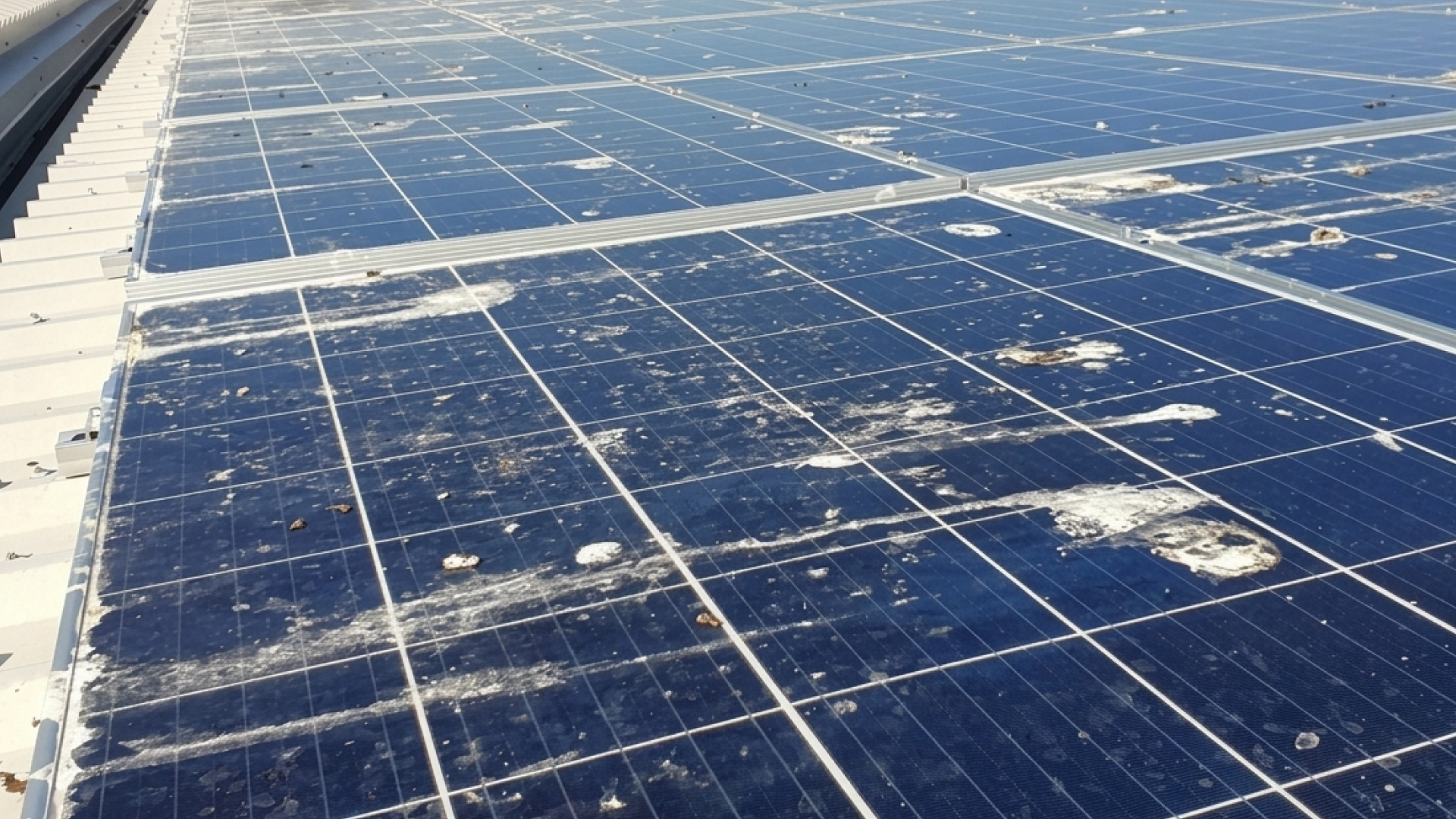
Solar panels are built to operate outdoors, but they are not immune to problems caused by birds. Seagulls can turn a clean solar array into a recurring maintenance issue through droppings, nesting materials, feathers, food debris, and repeated roosting.
Bird activity around solar panels can create several concerns at the same time. Droppings can cover portions of panels, nests can accumulate around equipment, and repeated bird activity can make cleaning more frequent and difficult. On commercial properties, the problem can extend beyond the solar array to rooftops, HVAC equipment, gutters, walkways, parking areas, and outdoor spaces.
The challenge is not simply getting seagulls to leave for a day. If a property provides an attractive combination of food, shelter, elevated perches, and nesting opportunities, birds may continue returning after temporary removal methods are used.
A better approach is to understand why seagulls are attracted to the solar installation and then use a properly selected, humane deterrent strategy to make the area less suitable for nesting and roosting.
Why Seagulls Are Attracted to Solar Panels
Solar panels can unintentionally create favorable conditions for birds. Their elevated position gives seagulls a clear view of the surrounding area, while the panels and supporting structures can provide protected spaces where birds may perch or attempt to nest.
The attraction is rarely caused by the panels alone. The surrounding property can play an equally important role.
Elevated Structures Provide Convenient Roosting Areas
Seagulls naturally look for elevated locations where they can rest, observe their surroundings, and remain away from ground-level disturbances.
A rooftop solar array can provide multiple elevated surfaces. Depending on the installation, birds may perch on panel edges, mounting components, nearby rooftop equipment, parapets, or other structures.
Once birds become accustomed to a particular location, repeated roosting can become a persistent property-management problem.
Solar Panels Can Create Sheltered Spaces
The space beneath and around solar panels may offer protection from weather and other disturbances.
If birds can access these areas, they may investigate them for nesting. Nesting activity can become particularly troublesome because birds may bring twigs, leaves, feathers, food, and other materials onto the roof.
A small amount of nesting activity can gradually become a larger maintenance issue if it is allowed to continue.
Nearby Food Sources Can Increase Bird Activity
Solar panels do not necessarily attract seagulls because they are solar panels. The surrounding environment can be the real attraction.
Restaurants, waste facilities, food-processing locations, waterfront properties, marinas, docks, landfills, commercial parking areas, and other locations with accessible food waste can support substantial bird activity.
This is why an effective bird control plan should consider the entire property rather than focusing exclusively on the panels.
How Seagull Droppings Affect Solar Panels
One of the most visible problems associated with birds around solar arrays is guano, commonly referred to as bird droppings.
A few droppings may seem like a cosmetic issue, but repeated accumulation creates additional maintenance concerns.
Droppings Can Block Portions of the Panel Surface
Solar panels need exposure to sunlight across their photovoltaic surface to generate electricity.
When bird droppings accumulate on the panel, they can obstruct portions of the surface. The effect depends on the amount and location of the contamination, the panel design, environmental conditions, and the overall condition of the array.
A single isolated spot does not necessarily create a major problem, but repeated contamination across an array can make cleaning and inspection more demanding.
Dried Droppings Can Be Difficult to Remove
Fresh bird droppings and dried deposits behave differently during cleaning.
Once material dries onto a panel surface, removing it may require more careful cleaning than simply rinsing the array. Improper cleaning methods can also create unnecessary risks for the panels or the people working around them.
Property owners should follow the solar manufacturer's cleaning recommendations or use qualified solar-panel cleaning professionals.
Bird Activity Creates More Than a Cleaning Problem
Guano can accumulate on surrounding roof surfaces, gutters, equipment, walkways, and other building components.
A property experiencing frequent bird activity may consequently require attention beyond routine solar-panel cleaning.
This is one reason prevention is often more practical than repeatedly cleaning the same areas without addressing why birds continue returning.
How Seagull Nesting Can Affect Solar Installations
Nesting presents a different problem from ordinary roosting.
A bird that briefly lands on a solar panel is one thing. A bird that repeatedly returns with nesting material has established a much stronger relationship with the location.
Nesting Materials Can Accumulate Around Equipment
Seagulls may bring twigs, vegetation, feathers, trash, and other materials into nesting areas.
Depending on the installation, materials can collect around panel supports, rooftop equipment, drainage areas, or other accessible spaces.
Accumulation can make inspection and maintenance more difficult and may interfere with access to parts of the solar installation.
Nesting Can Lead to Repeated Bird Activity
Once birds begin using a location for nesting, simply removing visible debris may not solve the underlying issue.
If the area remains accessible and attractive, birds may return and rebuild.
That is why bird control should focus on preventing access to preferred nesting and roosting locations rather than relying exclusively on repeated nest removal.
Active Nests Require Careful Handling
Property owners should not assume that every nest can simply be removed.
Bird protection laws and regulations vary by jurisdiction and species. Some birds and their nests may receive legal protection, and removing an active nest without appropriate guidance can create compliance issues.
A professional assessment can help determine the appropriate course of action before physical removal or exclusion work begins.
Why Temporary Bird Scare Methods Often Fall Short
Property owners sometimes try visual scare devices, noise makers, decoys, reflective objects, or other short-term methods.
These approaches may sometimes affect bird behavior, but their effectiveness can vary considerably.
Birds Can Become Accustomed to Repeated Signals
Seagulls are adaptable birds. A stationary object or predictable noise may initially attract attention, but birds can become less responsive when the threat does not result in a meaningful consequence.
This does not mean every visual or auditory deterrent is ineffective. It means the method needs to be appropriate for the specific site and bird behavior.
The Physical Environment Still Matters
A scare device does not necessarily prevent birds from reaching a roof or solar array.
If birds still have easy access to a preferred nesting or roosting location, the underlying attraction remains.
For persistent problems, physical deterrent and exclusion methods may provide a more site-specific approach.
How Professional Seagull Deterrent Systems Protect Solar Panels
Professional bird control starts with understanding how birds are using the property.
The objective is not simply to make noise or chase birds away. A customized deterrent plan can focus on the locations where seagulls perch, nest, land, and repeatedly return.
1. Assess the Solar Array and Surrounding Property
A site assessment should look beyond the panels.
Professionals may evaluate:
Solar panel layout and accessibility
Panel edges and mounting structures
Rooftop equipment
Parapets and elevated surfaces
Existing nests and roosting areas
Bird entry points
Nearby food or waste sources
Drainage areas
Adjacent buildings and structures
Signs of repeated bird activity
This information helps determine where deterrent measures are likely to be most useful.
2. Identify Roosting and Nesting Hotspots
Not every section of a roof necessarily has the same level of bird activity.
One side of a building may receive significantly more use because of wind exposure, nearby food sources, shelter, building orientation, or convenient perching surfaces.
Identifying these hotspots allows deterrent measures to be targeted rather than randomly installed.
3. Select Deterrents Based on Site Conditions
Different solar installations require different approaches.
Depending on the property, professional bird control may involve physical exclusion or deterrent systems designed to discourage birds from accessing specific surfaces.
Potential approaches can include systems designed for:
Solar-panel perimeter protection
Rooftop bird deterrence
Roosting-area protection
Nesting-area exclusion
Building ledges and parapets
HVAC equipment
Docks and waterfront structures
Waste and food-service areas
The appropriate system depends on the structure, bird behavior, access points, and property requirements.
4. Protect the Solar Array Without Damaging It
Any deterrent installed around solar panels should be compatible with the installation.
Poorly planned equipment placement can create maintenance complications or interfere with access to the solar system.
A professional installation should account for panel configuration, mounting systems, maintenance access, roof conditions, and the need to inspect the array in the future.
Best Practices for Protecting Solar Panels From Seagulls
A long-term bird-control strategy usually works better when several property-management practices are combined.
Keep Food and Waste Sources Controlled
Accessible food can encourage birds to remain near a property.
Commercial properties should maintain appropriate waste-management practices, keep food waste contained, and address areas where birds regularly find accessible food.
Waste facilities, restaurants, warehouses, and waterfront businesses may require additional attention because of the surrounding environment.
Inspect Solar Arrays Regularly
Routine inspection can identify early signs of bird activity before a minor issue becomes a larger one.
Look for:
Droppings
Nesting material
Feathers
Repeated bird activity
Damaged or displaced deterrent components
Blocked drainage areas
Debris beneath panels
New roosting locations
Early detection gives property owners an opportunity to address the problem before bird activity becomes deeply established.
Keep Maintenance Access Clear
Solar arrays require periodic inspection and maintenance.
Bird control measures should be planned with future access in mind. Maintenance personnel need to be able to inspect the panels, wiring, mounting equipment, and surrounding roof areas safely.
Address the Whole Property
Protecting only the solar panels may not solve the problem if birds continue using the rest of the building.
For example, seagulls may simply move from the solar array to a nearby parapet, HVAC unit, warehouse roof, dock, or other elevated structure.
A property-wide assessment can reveal these connected activity zones.
Common Mistakes Property Owners Make
Several approaches can unintentionally make bird problems more difficult to manage.
Waiting Until Nesting Becomes Extensive
A property may tolerate occasional bird activity for months before the problem becomes obvious.
By the time large amounts of nesting material and guano are visible, birds may already be strongly accustomed to the site.
Early intervention can make the situation easier to manage.
Removing Nests Without Addressing Access
Removing visible nesting material does not automatically prevent birds from returning.
If the same nesting location remains accessible, birds may rebuild.
The more effective question is not only, "How do we remove this nest?" but also, "Why can birds continue accessing this location?"
Relying on One Deterrent Everywhere
A method that works on one rooftop may not be appropriate for another.
Solar-panel layouts, roof designs, bird pressure, surrounding food sources, and environmental conditions differ from property to property.
A customized strategy is more appropriate than assuming one product or technique will work universally.
Are Solar Panel Bird Deterrents Humane?
Humane bird control focuses on changing bird behavior or restricting access to problem areas without intentionally harming wildlife.
The exact approach should account for the species involved, local regulations, existing nests, and the physical characteristics of the property.
Professional systems are generally designed to make specific areas less attractive or less accessible for roosting and nesting rather than causing physical harm.
Property owners should also verify applicable federal, state, provincial, or local wildlife requirements before disturbing birds, nests, or eggs.
When Should You Consider Professional Seagull Control?
Professional assistance can be especially useful when bird activity is persistent, widespread, or difficult to manage safely.
Consider a site assessment if you are seeing:
Repeated seagull activity around solar panels
Frequent guano accumulation
Nesting beneath or around panels
Birds returning after cleaning
Multiple rooftop roosting areas
Large amounts of nesting material
Bird activity around HVAC equipment
Problems extending across the entire property
Difficulty safely accessing affected areas
A professional can evaluate the property, identify bird activity patterns, and recommend deterrent measures appropriate for the structure.
A Practical Solar Panel Bird Protection Plan
Property owners looking for a straightforward process can use the following framework.
Step 1: Identify the Problem
Determine whether the primary issue is droppings, nesting, roosting, or a combination of all three.
Step 2: Inspect the Entire Property
Look beyond the solar panels for other locations that birds may be using.
Step 3: Identify Attractants
Check for accessible food, waste, water, shelter, elevated perches, and protected nesting areas.
Step 4: Assess Existing Nests Carefully
Do not automatically disturb nests. Determine whether birds or nests may be protected under applicable wildlife regulations.
Step 5: Choose a Site-Specific Deterrent Strategy
Select deterrent and exclusion measures based on the solar array, roof configuration, bird behavior, and maintenance requirements.
Step 6: Maintain the System
Inspect deterrent equipment and the surrounding property periodically. Bird behavior and site conditions can change over time.
Conclusion
Protecting solar panels from seagull droppings, nesting, and roosting requires more than repeatedly cleaning the panels.
The most useful approach begins with understanding why birds are using the property and identifying the locations that support their behavior. From there, property owners can combine good waste management, regular inspections, appropriate maintenance, and professionally selected humane deterrents.
Solar installations should also be considered as part of the larger property environment. Rooftops, parapets, HVAC equipment, warehouses, docks, waste areas, and nearby structures may all contribute to ongoing seagull activity.
When bird pressure becomes persistent, a professional site assessment can help identify the problem areas and develop a customized strategy that protects the solar installation while respecting wildlife and applicable regulations.
For commercial and residential properties dealing with recurring seagull problems, the goal should be long-term prevention rather than an endless cycle of cleaning, chasing, and removing nesting material.
Frequently Asked Questions
What is the most effective way to keep seagulls off solar panels?
The most effective approach depends on the property and how birds are using it. A professional assessment can identify nesting and roosting locations and determine which humane deterrent or exclusion methods are appropriate for the solar array and surrounding structures.
Can seagull droppings damage solar panels?
Seagull droppings can cover portions of the panel surface and create recurring cleaning requirements. Heavy or repeated contamination can interfere with sunlight reaching affected areas. Solar panels should be cleaned according to manufacturer recommendations or by qualified professionals.
How do professional seagull deterrent systems prevent nesting and roosting?
Professional systems are designed to make selected areas less accessible or less attractive for birds. Depending on the site, deterrents can be positioned around solar arrays, rooftops, ledges, equipment, and other locations where seagulls regularly perch or attempt to nest.
Are seagull deterrent systems safe and humane?
Humane bird-control systems are intended to discourage birds from using specific areas without intentionally harming them. The appropriate method depends on the property, species, existing nesting activity, and applicable wildlife regulations.
Can seagulls damage commercial roofs and equipment?
Repeated bird activity can create maintenance problems through guano accumulation, nesting materials, debris, and repeated use of rooftop equipment and other structures. Problems may extend beyond the solar panels to HVAC systems, drains, roof surfaces, walkways, and other areas.
How can property owners protect solar panels from seagull nesting?
Start by identifying where birds are accessing the array and where they are attempting to nest. A site-specific deterrent or exclusion strategy can then be developed to discourage access while maintaining appropriate space for solar-panel inspection and maintenance.
How long do professional seagull deterrent systems typically last?
Longevity depends on the type of system, installation conditions, weather exposure, property maintenance, and other site factors. Regular inspections can help identify damaged or displaced components and keep the deterrent system functioning as intended.
Can professional seagull control prevent birds from returning to the same property?
Professional bird control is intended to reduce access to preferred roosting and nesting areas, but no responsible system should promise that birds will never return. Results depend on bird behavior, environmental conditions, food sources, and how comprehensively the property is addressed.
How much does professional seagull control cost for a solar-panel installation?
Pricing varies according to the size and design of the solar array, roof configuration, extent of bird activity, accessibility, required deterrent equipment, and the number of areas that need protection. A site assessment is usually needed to determine the appropriate scope of work.
How does a professional seagull site assessment work?
A professional assessment examines the solar panels, roof, surrounding structures, nesting locations, roosting areas, access points, and potential attractants. The findings can then be used to develop a customized bird-deterrent plan suited to the property's physical conditions and maintenance needs.