What Is the Best Way to Keep Seagulls Off Commercial Roofs?
Introduction
Seagulls can turn a commercial roof into a recurring maintenance problem. A building that seems clean and well maintained from the ground may be dealing with bird droppings, nesting materials, damaged equipment, blocked drains, unpleasant odors, and birds returning to the same roof day after day.
For commercial property owners, the challenge is rarely just getting seagulls to leave once. The real goal is to make the roof less attractive for nesting, roosting, and repeated visits while protecting the birds and avoiding unnecessary damage to the building.
The most effective way to keep seagulls off a commercial roof is usually a professionally designed, humane seagull deterrence for commercial and residential properties based on the property's structure, bird activity, nesting locations, and access points. Depending on the site, effective systems may include bird spikes, bird wire, netting, electric deterrent systems, visual deterrents, physical exclusion methods, or combinations of several techniques.
A successful seagull control plan starts with understanding why birds are using the roof in the first place. Once those attractants and access points are identified, the right deterrent can be installed where it will actually change bird behavior.
Why Seagulls Are Attracted to Commercial Roofs
Commercial buildings can provide many of the conditions seagulls look for in a resting or nesting location. Flat rooftops, parapets, HVAC equipment, rooftop machinery, ledges, and protected corners can create elevated spaces that birds find suitable for roosting.
Food availability can make the problem worse. Restaurants, food-service businesses, waste facilities, shopping centers, warehouses, and properties near marinas or coastal areas may provide easy access to food sources.
Common reasons seagulls use commercial roofs
Seagulls may choose a commercial roof because it offers:
Elevated areas for observing their surroundings
Flat or sheltered surfaces for resting
Protected corners for nesting
Warm surfaces around mechanical equipment
Easy access to nearby food
Separation from some ground-level predators
Convenient access to water or coastal environments
A roof does not have to be close to the ocean to experience a seagull problem. Depending on the species and surrounding environment, birds may travel significant distances between feeding, nesting, and resting areas.
Nesting creates a different level of problem
Roosting birds may be inconvenient, but nesting birds can be considerably harder to manage.
Once seagulls establish a nest, they may become territorial around the area. Eggs, chicks, nesting material, and accumulated droppings can also make routine roof maintenance more difficult.
That is why commercial bird control is generally more effective when deterrents are installed before birds become firmly established.
What Is the Best Way to Keep Seagulls Off a Commercial Roof?
There is no single deterrent that works equally well on every commercial roof. The best approach is usually physical exclusion and deterrence designed specifically for the locations where birds land, perch, roost, or nest.
A professional assessment can determine which system is appropriate for the roof's layout and the level of bird activity.
Physical bird deterrents
Physical deterrents change the areas where birds can comfortably land.
Common examples include bird spikes and bird wire systems. Properly installed, these systems make targeted ledges and surfaces less suitable for perching without requiring birds to be physically harmed.
Bird spikes can be useful on parapets, ledges, beams, signs, and other relatively narrow surfaces. Bird wire can provide another option where birds repeatedly land along open ledges or roof edges.
Bird netting and exclusion
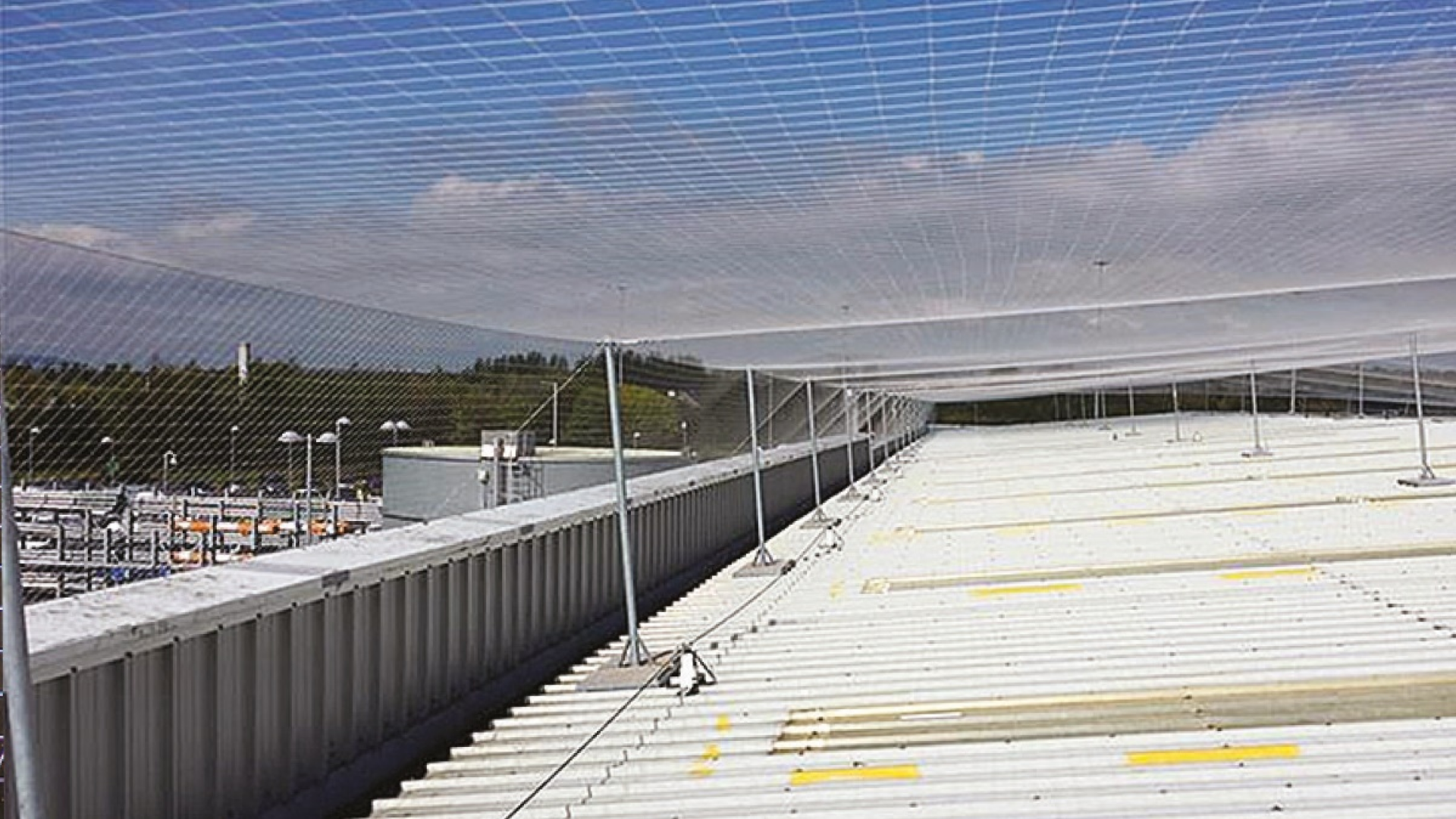
Bird netting can be appropriate when an area needs to be physically closed off.
For example, netting may be considered around structures, enclosed rooftop sections, loading areas, equipment spaces, or other locations where birds repeatedly enter.
The effectiveness of exclusion depends heavily on proper installation. Gaps, loose sections, and poorly protected entry points can allow birds to continue accessing the area.
Electric bird deterrent systems
Some commercial properties use low-profile electric bird deterrent systems along specific landing areas.
These systems are designed to discourage birds from landing on protected surfaces rather than injuring them. They can be useful where appearance matters or where traditional spikes or netting are difficult to install.
A qualified installer should evaluate the roof material, equipment, access requirements, and system placement before installation.
Visual and behavioral deterrents
Visual deterrents can sometimes contribute to a broader bird management plan. Reflective devices, predator decoys, and other visual methods may discourage birds temporarily in certain situations.
However, birds can become accustomed to static deterrents. For persistent commercial seagull problems, visual products alone may not provide the long-term protection property owners want.
Why Professional Seagull Control Works Better Than Random DIY Products
A common mistake is buying a few bird deterrent products and placing them wherever birds are visible.
That approach may work temporarily, but commercial roofs often have multiple bird landing zones. If the primary nesting or roosting location remains accessible, birds may simply move a short distance and continue using the property.
Professional bird control focuses on the site rather than the product.
A professional assessment identifies the problem areas
An effective assessment may examine:
Where birds are landing
Where they are nesting
How they access the roof
Which surfaces receive the most droppings
Nearby food and water sources
Rooftop HVAC and mechanical equipment
Roof edges and parapets
Drainage areas
Signs, beams, canopies, and architectural ledges
Existing deterrents and why they may not be working
The goal is to understand the bird's behavior and the building's physical characteristics before recommending an installation.
One property may need several deterrents
A large commercial property rarely has identical roof surfaces everywhere.
A warehouse may have long roof edges that are suitable for bird wire. A restaurant may have rooftop equipment and sheltered corners that require exclusion. A facility with enclosed mechanical structures may benefit from netting in specific areas.
A customized system can combine different deterrent methods rather than forcing one product onto every part of the property.
How Seagull Deterrent Systems Prevent Roosting and Nesting
A deterrent system works by changing the conditions that make a location attractive or accessible to birds.
The objective is not necessarily to chase every bird away. Instead, the system should make protected areas unsuitable or inconvenient for landing, perching, roosting, or nesting.
Step 1: Inspect the property
The first step is a detailed site assessment. Bird activity, roof design, equipment placement, access points, and existing damage should be documented. This information helps determine which areas require protection.
Step 2: Identify attractants and access points
The next step is determining why birds are staying. Food waste, accessible garbage, standing water, nesting materials, and sheltered roof spaces can contribute to recurring activity. Addressing these factors can improve the effectiveness of physical deterrents.
Step 3: Select appropriate deterrents
The system should match the surface and bird behavior. Narrow ledges may call for one type of deterrent, while larger enclosed spaces may require exclusion netting. High-visibility areas may require a lower-profile approach.
Step 4: Install the system correctly
Placement matters as much as the product itself. A deterrent that leaves a convenient landing zone next to the protected area may simply shift bird activity rather than solving the underlying problem.
Step 5: Monitor and maintain
Commercial bird control is not necessarily a one-time decision. Property conditions can change. New equipment may be installed, roof areas may be renovated, or food and waste patterns may change. Periodic inspection helps identify areas where adjustments may be necessary.
How Seagulls Can Affect Commercial Roofs and Equipment
Bird activity can create more than an appearance problem.
Large accumulations of droppings can create difficult cleaning conditions and contribute to unpleasant odors. Nesting materials may accumulate around drains, equipment, roof openings, and other areas where debris can interfere with maintenance.
HVAC and rooftop equipment
Commercial HVAC systems often contain sensitive components that need regular inspection and maintenance.
Bird droppings and nesting material around rooftop equipment can make service areas harder to access and may contribute to additional cleaning and maintenance requirements.
Roof drains and drainage areas
Nesting material, feathers, and other debris can accumulate around drainage points.
Keeping roof drainage areas clear is an important part of general roof maintenance, particularly on commercial properties where standing water can create additional building concerns.
Building surfaces
Repeated bird activity can leave droppings on walls, windows, signs, walkways, vehicles, and outdoor customer areas.
For businesses with restaurants, patios, retail entrances, or customer-facing spaces, this can create an ongoing cleaning burden and affect the appearance of the property.
How to Protect Commercial Solar Panels From Seagulls
Solar panels can create another attractive surface for birds.
The panels provide elevated shelter and may create protected spaces where birds can perch or nest. Droppings can also accumulate on panel surfaces.
A solar array should be evaluated as part of the overall bird-control plan rather than treated as an isolated problem.
Solar panel bird exclusion
Specialized exclusion methods can be installed around appropriate areas of a solar array to reduce access beneath or around panels.
The exact approach depends on the panel configuration, roof design, wiring, maintenance requirements, and bird activity.
Any deterrent installed around solar equipment should allow appropriate access for inspection and maintenance while avoiding interference with the system.
Humane Seagull Control Is the Better Long-Term Approach
Commercial bird control does not have to mean harming wildlife.
Humane deterrent systems are designed to discourage birds from using specific areas while allowing them to move elsewhere. The objective is to protect the property without unnecessary injury to birds.
Property owners should also understand that wildlife laws and bird-protection requirements can vary by location and situation. Active nests, eggs, and birds may be subject to legal protections, so property owners should seek appropriate professional guidance before disturbing established nesting sites.
What humane bird control should accomplish
A well-planned system should aim to:
Discourage birds from protected surfaces
Reduce access to preferred nesting areas
Protect equipment and building surfaces
Reduce recurring droppings
Minimize unnecessary disturbance
Work with the property's existing structure
Provide a practical long-term management approach
The right strategy is prevention and exclusion rather than simply reacting after birds have established a nesting area.
Common Mistakes Property Owners Make With Seagull Control
Some bird-control efforts fail because the underlying problem is not addressed.
Using only fake predators
Predator decoys can produce an initial reaction, but birds may eventually recognize that the object does not pose a real threat.
They can be useful as part of a broader strategy, but relying on them alone may not solve persistent commercial roof activity.
Installing deterrents in only one area
Protecting the most visible section of the roof does not help if another ledge provides an equally attractive landing location.
A site-wide assessment can reveal secondary areas that need protection.
Ignoring food and waste management
A roof deterrent cannot eliminate the attraction created by easily accessible food.
Commercial properties should review garbage storage, outdoor food waste, dumpsters, restaurant disposal practices, and other potential food sources.
Waiting until nesting is established
Bird control is generally easier when access is addressed before birds become strongly attached to a particular location.
If nests are already present, property owners should not simply remove them without understanding applicable wildlife protections and the appropriate procedure.
Choosing the Right Seagull Control System for a Commercial Property
The best system depends on the building.
A small commercial building may need targeted protection along several roof edges. A large warehouse could require a combination of roof-edge deterrents and exclusion around equipment. A restaurant may need special attention around rooftop areas, waste storage, outdoor dining spaces, and customer entrances.
Consider these factors before selecting a system
Ask:
Where are birds spending the most time?
Are they roosting, nesting, or both?
What roof surfaces are they using?
Are HVAC units or solar panels involved?
Are food and waste sources nearby?
Are there existing deterrents?
Is the property in an area with applicable bird-protection requirements?
Does the system need to remain visually discreet?
Will maintenance crews need regular access to protected areas?
These questions help move the conversation from “Which bird product should I buy?” to “What is actually causing this bird problem?”
How Much Does Commercial Seagull Control Cost?
There is no universal price for commercial seagull control.
The cost can vary based on roof size, building height, accessibility, bird activity, the number of areas requiring protection, selected deterrent systems, installation requirements, and whether existing nests or deterrents need to be addressed.
A small targeted installation and a large commercial exclusion project are very different jobs.
For that reason, an on-site assessment is usually more useful than relying on a generic per-square-foot estimate.
What a professional quote should explain
A detailed proposal should identify:
Areas being protected
Recommended deterrent methods
Installation scope
Access requirements
Any necessary preparation
Maintenance considerations
Warranty information, if offered
Any limitations or conditions affecting performance
Clear documentation helps property owners compare proposals based on the actual scope of work rather than price alone.
Best Practices for Long-Term Seagull Management
A successful commercial bird-control strategy combines deterrents with property management.
Keep food waste controlled: Use secure waste containers and review dumpster practices regularly. Restaurants and food-service properties should pay particular attention to food scraps around disposal areas.
Keep roof areas maintained: Remove unnecessary debris and address areas that could provide nesting material or shelter.
Inspect after major roof changes: New HVAC equipment, solar panels, signs, structures, and renovations can create new perching or nesting opportunities.
Address bird activity early: Repeated sightings do not always mean a major infestation, but they can be an early warning sign. Early assessment can make it easier to identify preferred areas before nesting becomes established.
Use a customized system: Commercial properties have different roof designs, operating requirements, and bird pressures. A customized plan is more appropriate than assuming the same deterrent should be installed everywhere.
How Professional Seagull Control Supports Commercial Property Management
Bird control is one part of broader property maintenance.
For commercial businesses, protecting the physical building can also support customer experience, equipment maintenance, cleanliness, and the appearance of the property.
The same principle applies to digital visibility. Businesses that invest in physical property protection often also need a clear digital presence so customers can find them when searching for services. Website design, SEO, local SEO, Google Ads, content marketing, branding, and broader digital marketing strategy can work together to support that visibility.
For companies that depend on local customers, clear service information and useful educational content can also help search engines and AI platforms better understand what the business does, where it operates, and which problems it solves.
What Property Owners Should Do About a Seagull Problem
If seagulls are repeatedly using a commercial roof, start by documenting the problem.
Take note of where birds land, where droppings accumulate, whether nesting is occurring, and whether the activity is concentrated around HVAC equipment, solar panels, roof edges, dumpsters, or other areas.
Next, review potential food and water sources. Finally, arrange a professional assessment if the problem is persistent or covers multiple parts of the property.
The goal should be a long-term plan that combines exclusion, deterrence, property management, and appropriate monitoring.
Conclusion
The best way to keep seagulls off a commercial roof is usually a customized, humane deterrent and exclusion system designed around the property's specific bird activity and roof structure.
There is no universal product that works for every building. Bird spikes, wire systems, netting, electric deterrents, and other methods each have situations where they can be useful. The most effective approach begins with understanding where birds land, why they are staying, and how they are accessing the property.
Commercial property owners should also address food waste, standing water, nesting opportunities, and other conditions that encourage repeated bird activity. When these steps are combined with correctly installed deterrents and ongoing monitoring, businesses can better protect rooftops, HVAC equipment, solar panels, outdoor spaces, and building surfaces while using a humane approach to wildlife management.
A professional site assessment is the logical starting point when seagull activity has become persistent. It provides the information needed to select an appropriate system instead of relying on trial-and-error products that may only move the birds from one part of the property to another.
Frequently Asked Questions
1. What is the most effective way to keep seagulls off commercial roofs?
The most effective approach is usually a customized combination of physical exclusion and deterrents designed for the property's roof layout and bird behavior. Options can include bird spikes, wire, netting, electric deterrents, and targeted exclusion.
2. How do professional seagull deterrent systems prevent nesting and roosting?
Professional systems make selected surfaces difficult or unsuitable for landing, perching, and nesting. They are positioned around areas where birds regularly gather, reducing access to preferred locations without intentionally harming the birds.
3. Are seagull deterrent systems safe, humane, and legal in the USA and Canada?
Many deterrent systems are designed to discourage birds without causing unnecessary harm. However, wildlife protections vary by location, particularly around active nests, eggs, and birds. Local requirements should be considered before installation or nest removal.
4. How can seagulls damage commercial roofs, HVAC equipment, and building surfaces?
Bird droppings and nesting materials can create cleaning and maintenance problems around roofs, drains, HVAC equipment, walls, windows, signs, and other surfaces. Heavy bird activity can also make equipment areas more difficult for maintenance personnel to access.
5. How can property owners protect solar panels from seagull damage and droppings?
A solar array can be protected with appropriately designed bird exclusion or deterrent systems around accessible areas. The system should account for panel configuration, maintenance access, wiring, roof structure, and existing bird activity.
6. What are the best seagull control solutions for docks, piers, marinas, and boats?
The appropriate solution depends on where birds are landing and nesting. Physical deterrents, exclusion systems, and other targeted methods can protect railings, structures, equipment, and other surfaces while allowing normal access and operations.
7. How long do professional seagull deterrent systems typically last?
Service life depends on the deterrent type, installation quality, materials, weather exposure, roof conditions, and maintenance. A professional assessment can identify which system is appropriate for the property's environment and expected operating conditions.
8. Can professional seagull control prevent birds from returning to the same property?
A properly designed system can significantly reduce access to protected areas, but no responsible bird-control provider should guarantee that birds will never return. Results depend on bird behavior, nearby food sources, property conditions, and system coverage.
9. How much does professional seagull control cost for a commercial or residential property?
Pricing varies according to property size, roof design, bird activity, access, installation requirements, and the deterrent methods needed. A site assessment provides a more meaningful estimate than a generic price because each property presents different challenges.
10. How does a professional seagull site assessment and customized deterrent plan work?
The assessment identifies bird activity, nesting and roosting locations, access points, roof surfaces, equipment, food sources, and existing deterrents. Those findings are then used to select and position appropriate humane exclusion and deterrent methods.