How to Stop Seagulls From Nesting on Commercial Rooftops
Introduction
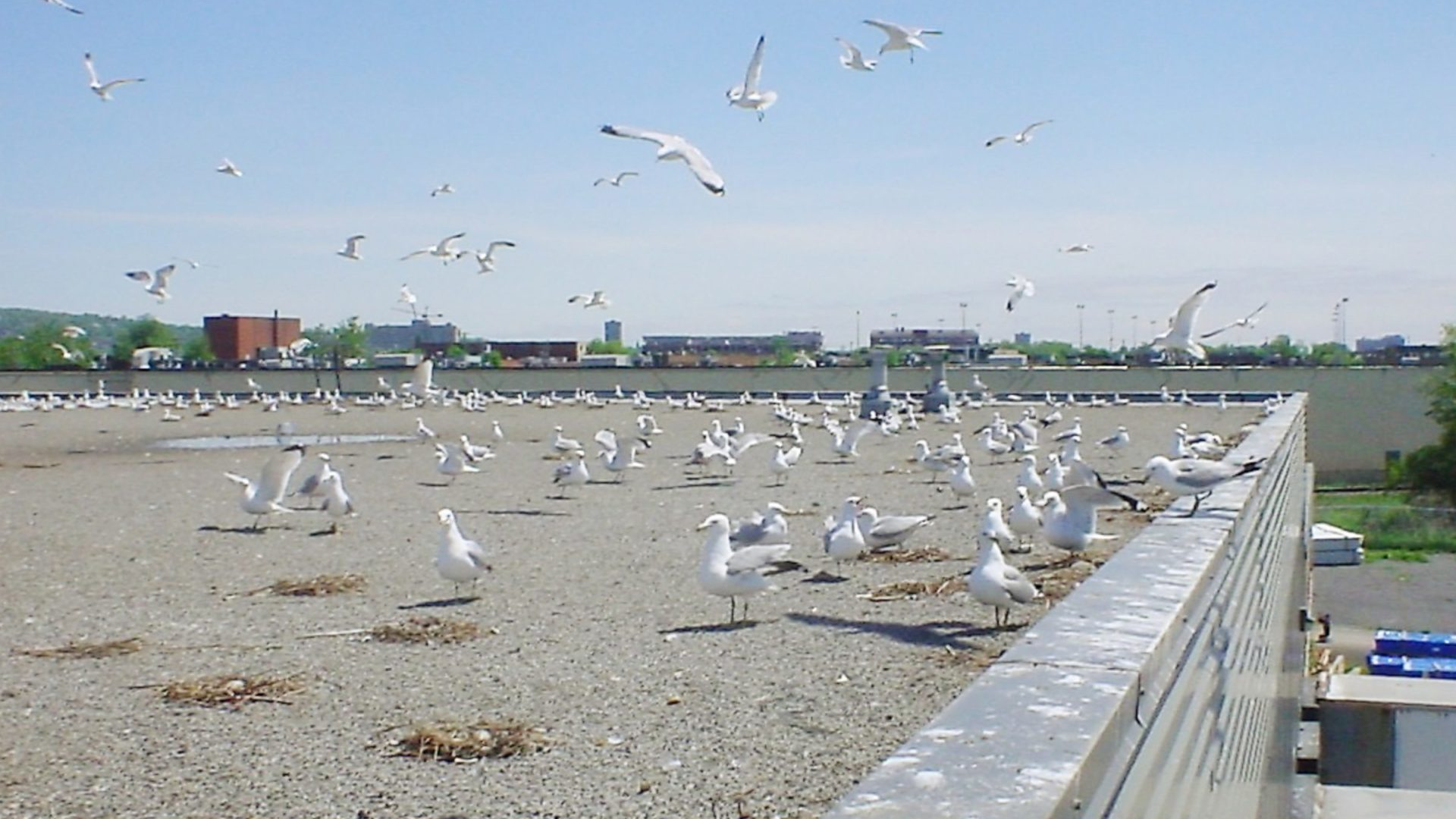
A commercial rooftop can look like an ideal nesting site from a seagull's perspective. It may provide elevated shelter, flat surfaces, access to food sources, protection from ground-level predators, and relatively undisturbed areas around HVAC equipment, parapets, vents, and rooftop structures. Once gulls discover that a building is suitable for nesting, they may return to the same property and create recurring problems.
Seagull nesting can affect far more than the appearance of a commercial building. Nesting material, feathers, droppings, and food debris can accumulate around drains, rooftop equipment, walkways, and building surfaces. Persistent guano contamination can create sanitation concerns, unpleasant odors, slippery surfaces, and difficult cleanup conditions. Birds may also become territorial around active nests, creating additional concerns for employees, contractors, customers, and visitors.
Stopping seagulls from nesting usually requires more than simply removing a nest after it appears. Effective bird control focuses on changing the conditions that make the roof attractive while using physical deterrents that discourage birds from landing, roosting, or nesting in protected areas.
For commercial property owners, the goal is not to harm or simply chase birds away. A well-planned seagull deterrent strategy creates physical barriers and other deterrents that make specific rooftop areas unsuitable for nesting while respecting applicable wildlife protections.
Why Seagulls Choose Commercial Rooftops
Commercial rooftops can offer several features that gulls find attractive. Large buildings provide height and visibility, while rooftop equipment and architectural structures can create sheltered areas.
Common rooftop features that attract nesting gulls
Seagulls may investigate commercial roofs that provide:
Flat or gently sloped surfaces
Parapets and ledges
HVAC units and mechanical equipment
Covered or sheltered corners
Roof drains and areas where water collects
Access to nearby food sources
Limited human activity
Existing nesting material or evidence of previous nesting
A roof does not need to provide all of these features to become attractive. Once gulls establish a reliable nesting location, their repeated use of the property can make the problem progressively harder to manage.
Why an existing nest changes the situation
An empty rooftop and an active nesting site are different management challenges. Birds that have already established a nesting location may show stronger attachment to particular areas.
That is why removing visible birds without addressing the underlying access points often produces only temporary results. A successful plan needs to consider where the birds land, where they roost, where they nest, and what conditions are encouraging them to return.
What Problems Can Seagull Nests Cause on Commercial Roofs?
Seagull nesting can create operational, maintenance, sanitation, and property-management concerns.
Guano and contamination
Bird droppings can accumulate around rooftop equipment, drainage areas, walkways, and building surfaces. Large accumulations can be difficult to remove and may require specialized cleaning procedures.
Guano can also make surfaces slippery and create an unpleasant environment for employees or contractors working on the roof.
Blocked drainage and debris
Nesting material can include twigs, grass, leaves, feathers, and other debris. If this material accumulates around roof drains or drainage pathways, it can contribute to maintenance problems.
Regular inspections can help identify buildup before it becomes a larger issue.
HVAC and rooftop equipment concerns
Commercial roofs often contain expensive mechanical equipment. Birds may perch or nest around HVAC units, vents, pipes, and other rooftop components.
Droppings and nesting debris can increase cleaning and maintenance requirements. Bird activity may also make routine equipment inspections more difficult.
Employee and visitor concerns
Gulls can become defensive around nests, particularly when they perceive people as threats. A commercial property with frequent bird activity may therefore require additional attention to employee access routes, rooftop work areas, loading zones, patios, and entrances.
How to Stop Seagulls From Nesting on a Commercial Rooftop
The most effective approach is usually a site-specific combination of prevention, exclusion, and deterrence.
1. Inspect the entire rooftop
Start with a detailed site assessment rather than immediately installing a deterrent.
Identify:
Current nesting locations
Frequent roosting areas
Preferred landing zones
Parapets and ledges
HVAC equipment
Roof drains
Covered areas
Food and waste sources nearby
Existing bird-control products
Areas with heavy guano accumulation
The objective is to understand the birds' behavior and identify the physical characteristics that make the roof attractive.
2. Identify and address attractants
Bird deterrence works better when property-management practices support the control system.
Nearby food sources may encourage gull activity. Open waste containers, poorly managed food waste, outdoor dining leftovers, and accessible garbage can make a property more attractive.
Commercial properties should review waste-handling procedures, keep food waste contained, clean outdoor dining areas regularly, and reduce opportunities for birds to access food.
This does not mean food is always the reason gulls are nesting on a particular roof. The purpose is to remove avoidable factors that may encourage continued bird activity.
3. Prevent access to preferred nesting areas
Physical exclusion is often a central part of commercial bird control.
Depending on the roof design, solutions may include:
Bird netting
Bird spikes
Bird wire systems
Tensioned deterrent systems
Specialized rooftop barriers
Configurations designed around equipment and architectural features
The appropriate system depends on the specific structure. A product that works well on one roof may be unsuitable for another.
4. Make landing and roosting difficult
If birds can comfortably land on a parapet, ledge, rooftop structure, or equipment housing, that area may remain attractive even after nesting material is removed.
Deterrents can be installed strategically to reduce usable landing and roosting space.
The goal is not simply to cover the entire roof with products. A professional design should concentrate protection where bird behavior shows the greatest need.
5. Protect HVAC equipment and vulnerable structures
HVAC units, pipes, vents, solar equipment, roof edges, and other structures can create convenient perching or nesting locations.
These areas should be evaluated individually. Deterrent placement needs to account for maintenance access so technicians can continue servicing equipment without unnecessary obstruction.
6. Address nesting activity appropriately
Active nests require special consideration. Wildlife protection requirements can vary depending on the species, location, nesting status, and applicable laws.
Property owners should not assume that every nest can simply be removed. Before disturbing active nests or birds, obtain guidance from an appropriately qualified bird-control professional and follow applicable federal, state, provincial, local, or other wildlife regulations.
The timing of installation can also matter. Preventive work performed before birds establish nesting activity may be easier than attempting to correct an established problem later.
Professional Seagull Deterrent Systems vs. Temporary Fixes
Commercial property owners sometimes begin with inexpensive measures such as visual scare devices, reflective objects, or improvised barriers.
These may provide short-term disruption, but birds can become accustomed to repeated stimuli. A rooftop that has several accessible nesting locations may continue attracting gulls even when temporary deterrents are present.
Temporary deterrents
Temporary approaches may include:
Reflective objects
Visual scare devices
Noise-based deterrents
Manual removal of nesting material
Occasional cleaning
Basic physical barriers
Their effectiveness depends heavily on the situation and how consistently they are used.
Professional physical deterrent systems
A professionally designed system starts with the building rather than a generic product.
The design considers:
Roof layout
Bird behavior
Nesting history
Equipment locations
Access requirements
Areas requiring protection
Maintenance needs
Applicable wildlife considerations
This approach is particularly useful for large commercial facilities where recurring bird activity affects operations and maintenance.
How a Commercial Rooftop Bird-Control Plan Works
A structured process makes seagull control easier to manage.
Step 1: Site assessment: A professional evaluates the rooftop, surrounding property, nesting areas, roosting locations, and potential attractants.
Step 2: Risk and access mapping: The problem areas are documented. This helps determine which locations require exclusion, deterrence, or additional property-management measures.
Step 3: Customized system design: The deterrent strategy is matched to the building. A warehouse roof, restaurant rooftop, office building, industrial facility, and waste-management property may require different approaches.
Step 4: Installation: The selected deterrents are installed in the areas where they can influence bird behavior while preserving access for building maintenance.
Step 5: Monitoring and maintenance: Bird behavior can change over time. Regular inspection helps identify damaged components, newly attractive areas, or locations that need adjustment.
Common Mistakes Property Owners Make
Removing nests without preventing return
Nest removal addresses the symptom, not necessarily the reason birds selected the location.
If the same ledge remains accessible, birds may return and rebuild.
Using one deterrent everywhere
Commercial roofs are rarely uniform. A parapet may require a different deterrent from an HVAC enclosure or a covered loading-area roof.
A one-product approach can leave vulnerable areas unprotected.
Ignoring nearby food and waste
Even a well-designed rooftop deterrent system may face greater pressure if birds have easy access to food nearby.
Bird control should be considered alongside waste management and property maintenance.
Waiting until nesting becomes severe
Early intervention gives property owners more opportunities to modify the environment before bird activity becomes firmly established.
A recurring bird problem should be treated as a property-management issue rather than a one-time cleanup task.
Best Practices for Long-Term Seagull Control
Long-term commercial bird management works best when prevention becomes part of routine property maintenance.
Inspect vulnerable areas regularly
Check parapets, rooftop equipment, drains, ledges, covered spaces, and previously affected areas.
Look for:
New nesting material
Droppings
Feathers
Repeated bird activity
Damaged deterrent components
New access points
Keep waste areas controlled
Secure garbage and food waste. Maintain outdoor dining areas and loading zones so they do not unnecessarily provide accessible food.
Protect equipment and maintenance routes
Deterrents should reduce bird activity without creating unnecessary obstacles for roof technicians, HVAC contractors, solar installers, or maintenance crews.
Document recurring activity
Photos and inspection notes can help property managers identify patterns. If birds repeatedly target the same section of the roof, that information can guide future adjustments.
Can Seagull Deterrents Be Humane?
Humane bird control focuses on preventing birds from using specific areas rather than intentionally injuring them.
Physical deterrent systems can discourage landing, roosting, and nesting by changing access to suitable spaces. The objective is to protect the building while allowing birds to move elsewhere.
Wildlife laws and regulations still matter. Depending on the jurisdiction and circumstances, certain birds, nests, eggs, or nesting activities may receive legal protection.
A responsible commercial bird-control plan should account for these requirements before installation, nest removal, or other intervention.
Protecting Commercial Roofs Before Seagulls Establish Nests
Preventive bird control can be easier to manage than repeated cleanup.
For a new commercial building, property owners can evaluate bird-risk areas during roof planning and maintenance. Existing facilities can identify vulnerable structures during routine inspections.
Particular attention may be useful around:
Flat roofs
Rooftop restaurants
Warehouses
Distribution centers
Waste facilities
Industrial buildings
Shopping centers
Office buildings
Hotels
Buildings near waterways
Facilities with outdoor dining
A building does not have to be beside the ocean to experience seagull activity. Gulls can use urban and inland environments when suitable food, shelter, and nesting opportunities are available.
A Practical Checklist for Commercial Property Managers
Before selecting a seagull deterrent system, ask:
Where are gulls currently landing?
Where are they nesting or attempting to nest?
Which rooftop structures provide shelter?
Are HVAC units or other equipment attracting activity?
Are drains or gutters collecting nesting debris?
Are food or waste sources accessible nearby?
Has the property experienced repeated nesting?
Are existing deterrents damaged or ineffective?
Does the proposed system allow safe maintenance access?
Are there wildlife-protection requirements that need to be considered?
These questions provide a useful starting point for evaluating the problem before investing in a control system.
Why Customized Bird Control Matters
No two commercial rooftops are exactly alike. Roof dimensions, equipment placement, architecture, surrounding land use, bird activity, and maintenance requirements all influence the appropriate deterrent strategy.
A customized system can concentrate protection where it is needed instead of treating every square foot identically.
That matters for commercial properties because the objective is not simply to make a roof look different. The system needs to work with the building's practical requirements while reducing opportunities for nesting and roosting.
Conclusion
Stopping seagulls from nesting on a commercial rooftop starts with understanding why the birds selected the property in the first place. Accessible ledges, sheltered structures, rooftop equipment, nearby food sources, and previously established nesting locations can all contribute to recurring bird activity.
The most practical long-term approach combines site assessment, attractant management, physical exclusion, targeted deterrents, responsible nest management, and regular inspection. Instead of repeatedly cleaning guano or removing nesting material after the problem develops, property owners can focus on preventing birds from finding the roof suitable in the first place.
Commercial bird control should also respect wildlife protections and preserve safe access for employees and maintenance crews. A well-designed seagull deterrent system protects the building while addressing the specific areas where birds are attempting to land, roost, and nest.