What Causes Seagulls to Roost on Commercial Properties?
Introduction
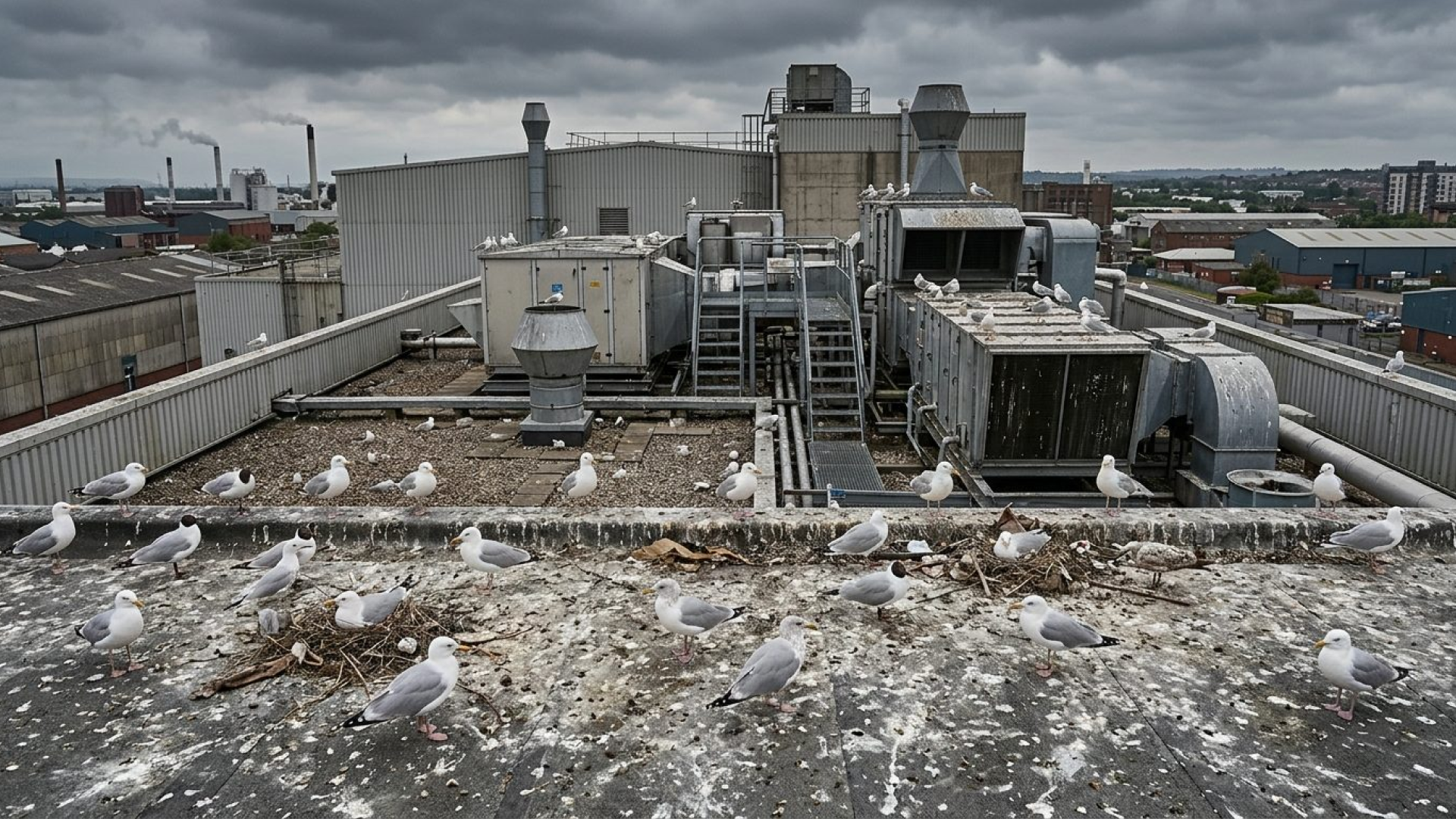
Seagulls are highly adaptable birds, and commercial properties can provide many of the conditions they need to rest, nest, and remain close to reliable food sources. Flat rooftops, warehouses, parking structures, docks, restaurants, waste facilities, and other large commercial sites often offer elevated surfaces with few natural predators and plenty of nearby resources.
A small number of birds may not seem like a serious concern. The problem can grow when a property becomes an established roosting or nesting location. Droppings can accumulate on roofs, walkways, equipment, vehicles, and outdoor seating. Nesting materials may obstruct drainage systems, while repeated bird activity can create sanitation, maintenance, and property-management challenges.
Understanding why seagulls choose commercial properties is the first step toward managing the problem effectively. Bird behavior, building design, food availability, water, shelter, and previous nesting activity can all influence where gulls settle.
This guide explains the main reasons commercial properties attract seagulls, what makes certain locations more appealing than others, and how property owners can reduce the conditions that encourage long-term roosting and nesting. For broader strategies, read our guide on seagull control.
Why Do Seagulls Roost on Commercial Properties?
Seagulls do not choose commercial buildings at random. A property becomes attractive when it provides one or more resources that support resting, feeding, nesting, or protection.
Several factors commonly work together.
Elevated and Open Roosting Areas
Many commercial buildings have large, flat roofs that resemble the open surfaces gulls naturally use for resting and observing their surroundings.
A rooftop can provide a clear view of the surrounding area while giving birds enough space to land, walk, rest, and take off. Mechanical equipment, parapet walls, rooftop structures, and other features can create additional perching locations.
Large warehouses, shopping centers, distribution facilities, office buildings, and industrial properties can be particularly attractive because their roofs may remain relatively undisturbed for long periods.
Reliable Food Sources Nearby
Food availability is one of the strongest reasons birds remain near a particular property.
Commercial properties may be located close to:
Restaurants and food-service businesses
Open dumpsters
Waste transfer areas
Grocery stores
Fish-processing facilities
Landfills and waste facilities
Outdoor dining areas
Food-storage operations
Commercial fishing areas
Even when food is not directly on the roof, a nearby dependable food source can make the entire property more attractive.
A common misconception is that removing birds from a rooftop will solve the problem permanently. If a nearby food source remains available, gulls may continue returning to the general area.
Safe Places Away From Ground-Level Disturbance
Commercial rooftops can provide a relatively quiet place for gulls to rest.
People, vehicles, pets, and other ground-level activity may make some areas less appealing. A roof, upper-level ledge, or elevated mechanical area can offer birds distance from those disturbances.
This is one reason simply chasing birds away may provide only temporary relief. Once the property becomes quiet again, birds can return to the same preferred location.
What Makes a Commercial Roof Attractive to Seagulls?
Not every commercial roof experiences the same level of bird activity. Certain physical characteristics can make one building more attractive than another.
Flat Roofs and Large Surface Areas
Flat commercial roofs provide substantial landing and resting space. Large uninterrupted areas are particularly useful because birds can move around without encountering many obstacles.
Roof-mounted equipment can also create sheltered spaces or elevated perches. If you are dealing with these structures, you can learn specific techniques for keeping seagulls off commercial roofs.
Parapets, Ledges, and Mechanical Equipment
Building features can give gulls convenient places to land and observe their surroundings.
Common examples include:
Parapet walls
Rooftop HVAC units
Pipes and ducts
Raised platforms
Sign structures
Exterior ledges
Solar equipment
Roof-access structures
These features may not attract birds individually, but together they can create a comfortable environment for repeated use.
Limited Human Activity
A rooftop that receives little routine maintenance or foot traffic may become particularly attractive.
Once gulls discover that a roof is rarely disturbed, they may begin using it as a regular resting or nesting location. Repeated use can create a pattern that becomes harder to manage over time.
Why Do Seagulls Return to the Same Commercial Property?
Repeated return visits usually have a reason. Birds may recognize locations that provide dependable resources or suitable resting and nesting conditions.
Familiar Roosting Locations
Gulls can repeatedly use locations that have previously provided safe resting areas.
If a commercial roof consistently offers open space, protection, and limited disturbance, birds may continue visiting it even after temporary removal.
This explains why property owners sometimes see the same problem return shortly after birds have been chased away.
Nesting and Territorial Behavior
During nesting periods, gulls may become strongly attached to particular areas.
A roof can provide suitable locations for nesting if it has protected corners, gravel surfaces, rooftop equipment, drainage features, or other structures that offer some separation from regular activity.
Once nesting has begun, bird-control management becomes more complicated because active nests, eggs, or young birds may be subject to applicable wildlife protections. Understanding how professional seagull deterrent systems prevent nesting and roosting is critical during this phase.
Previous Nesting Activity
Evidence of previous nesting can also indicate that a property provides conditions gulls find suitable.
Signs may include accumulated nesting material, repeated droppings in specific areas, feathers, eggshells, or birds repeatedly gathering around the same rooftop locations.
Property managers should address recurring activity rather than treating each bird sighting as an isolated incident.
How Food and Waste Attract Seagulls
Food-related activity deserves special attention because gulls are opportunistic feeders.
Open or Accessible Waste Containers
Overflowing dumpsters and unsecured waste containers can provide easy access to food.
Restaurants, shopping centers, food-processing businesses, and other commercial properties should inspect waste-management practices if gull activity is increasing.
Practical measures may include:
Keeping waste containers closed.
Cleaning food residue around dumpsters.
Avoiding unnecessary overflow.
Coordinating waste collection schedules appropriately.
Keeping food-service areas clean.
Addressing spilled food promptly.
Bird deterrents work more effectively when property conditions do not continually reward birds for returning.
Outdoor Dining Areas
Restaurants and hospitality properties may attract gulls because food is readily available and customers may unintentionally feed birds.
Dropped food, unattended meals, overflowing trash, and outdoor waste containers can all contribute to bird activity.
A combination of good sanitation practices and physical bird deterrence may be needed where outdoor dining is involved.
Do Water Sources Attract Seagulls to Commercial Properties?
Water can contribute to the attractiveness of a property, particularly where birds already have access to food.
Commercial sites near coastlines, rivers, lakes, marinas, docks, wastewater facilities, or other water sources may naturally experience more gull activity.
However, water alone does not necessarily explain why gulls choose one building over another.
The surrounding environment matters. A property that combines nearby water, food, open roof space, and relatively low disturbance can provide several reasons for birds to remain in the area.
Why Do Seagulls Choose Warehouses and Industrial Buildings?
Warehouses and industrial facilities often have several characteristics that gulls can exploit.
Large buildings may have broad roofs, rooftop equipment, loading areas, waste containers, and relatively limited pedestrian activity. Industrial zones can also be close to ports, waterways, food-processing facilities, waste operations, or open land.
Rooftop Equipment Can Create Preferred Areas
HVAC units, vents, pipes, and other structures may provide birds with sheltered or elevated locations.
Unfortunately, bird droppings around mechanical equipment can create additional maintenance concerns. Accumulation on equipment and surrounding surfaces may make routine cleaning more difficult and can contribute to unpleasant working conditions.
Large Properties Can Be Difficult to Monitor
A small roof can be inspected quickly. A large industrial property may contain numerous potential roosting points.
Birds can move between sections of the building, making it difficult to identify the exact areas they prefer.
A professional site assessment can help identify active bird-use areas, potential nesting locations, food attractants, access points, and physical features that should be addressed.
Why Solar Panels Can Become Seagull Roosting Areas
Solar arrays can unintentionally create attractive spaces for birds.
Panels provide elevated surfaces, while the gaps and structures underneath may offer sheltered areas. Droppings can also accumulate on panel surfaces and surrounding equipment.
Bird activity around solar installations can create maintenance concerns because heavy contamination may require additional cleaning.
Protecting Solar Panels Requires More Than Cleaning
Cleaning removes existing contamination, but it does not necessarily address why birds keep returning.
A longer-termed strategy on how to protect solar panels from seagull droppings may combine:
Physical deterrent systems
Access-point management
Rooftop maintenance
Waste and food-source control
Regular inspections
Appropriate exclusion measures
The exact approach depends on the solar installation, roof design, bird behavior, and local conditions.
What Problems Can Seagull Roosting Cause?
Roosting itself may appear harmless, but persistent bird activity can affect commercial properties in several ways.
Droppings and Surface Contamination
Bird droppings can accumulate on roofs, sidewalks, equipment, vehicles, signs, outdoor furniture, and other surfaces.
Heavy accumulation creates cleaning and maintenance demands and can make public-facing areas less pleasant.
Nesting Material and Drainage Problems
Nesting material can accumulate around rooftop features and drainage areas.
Commercial property managers should inspect roof drains, gutters, scuppers, and other water-management components when bird activity is persistent.
HVAC and Building Equipment
Birds may gather around HVAC systems and other rooftop equipment because these structures provide elevated surfaces and shelter.
Keeping these areas clean and monitoring bird activity can help property managers identify developing problems before they become more difficult to manage.
Outdoor Areas and Customer Experience
Restaurants, hotels, shopping centers, marinas, and entertainment venues have an additional concern: customers notice bird activity.
Frequent droppings, aggressive food-seeking behavior, feathers, nesting debris, and birds gathering around outdoor seating can affect the appearance and usability of customer areas. Understanding how seagulls damage commercial roofs, HVAC equipment, and building surfaces helps highlight why early intervention matters.
Why Bird Scaring Alone May Not Solve the Problem
Visual scare devices, noise, and occasional bird removal may produce short-term changes in bird behavior, but they may not address the underlying reason birds selected the property.
If a location continues to provide food, shelter, nesting opportunities, and comfortable roosting surfaces, gulls may adapt to temporary disturbances.
This is why effective commercial bird control generally begins with understanding the site rather than choosing a deterrent based solely on what is easiest to install.
How Professional Seagull Control Addresses Roosting
A professional approach focuses on the conditions that make a property attractive and the specific locations birds are using.
Step 1: Assess the Property
The first step is identifying where birds are landing, resting, feeding, and nesting.
A site assessment may examine:
Roof layout
Bird activity
Nesting evidence
Food and waste sources
HVAC equipment
Solar panels
Ledges and parapets
Drainage areas
Adjacent buildings
Docks or waterfront areas
Outdoor dining spaces
Step 2: Identify the Main Attractants
Not every property has the same underlying issue.
One facility may have accessible waste. Another may have a large undisturbed rooftop. A waterfront property may have natural food resources nearby.
Identifying the attractants helps determine what should change.
Step 3: Select Appropriate Deterrents
Physical bird-control systems can be designed around the property's architecture and the birds' behavior.
Depending on the site, professional deterrent strategies may include exclusion and physical systems designed to make specific surfaces less suitable for landing, roosting, or nesting.
The objective is to discourage birds without harming them.
Step 4: Maintain the System and Property
Bird control is not necessarily a one-time installation.
Buildings change, vegetation grows, equipment is replaced, and bird behavior can change with environmental conditions. Periodic inspection helps identify areas where birds may be attempting to regain access.
Are Seagull Deterrent Systems Humane?
Responsible bird control should focus on preventing unwanted access rather than harming wildlife.
Professional humane deterrent systems are designed to discourage gulls from landing, roosting, or nesting in protected areas while allowing them to move elsewhere. Ensuring that seagull deterrent systems are safe and humane for wildlife is vital for ethical property management.
Property owners should also consider applicable federal, state, provincial, and local wildlife regulations before disturbing active nests or birds.
The correct approach can vary by location and species. If active nesting is present, property managers should seek appropriate professional and regulatory guidance before taking action.
Common Misconceptions About Commercial Seagull Problems
“If We Remove the Droppings, the Problem Is Solved”: Cleaning addresses the visible symptom, not necessarily the reason birds are present. If gulls continue to have access to the same attractive roof or food source, contamination can return.
“Seagulls Only Cause Problems Near the Ocean”: Gulls are adaptable and can be found far from coastal environments. Commercial properties near inland waterways, waste facilities, restaurants, lakes, rivers, and other food sources may also experience significant bird activity.
“Chasing Birds Away Is Enough”: Repeated disturbance may move birds temporarily, but it does not necessarily prevent them from returning. Long-term management usually requires addressing the physical areas birds prefer.
“Every Bird Deterrent Works on Every Building”: Commercial properties differ substantially. A system suitable for one roof may not be appropriate for a solar installation, warehouse, dock, marina, or outdoor dining area. Site-specific planning is important.
Best Practices for Preventing Seagull Roosting
Property owners can reduce the likelihood of persistent gull activity by combining environmental management with appropriate deterrence.
Useful practices include:
Secure commercial waste and dumpsters.
Clean food spills promptly.
Reduce unnecessary food access.
Inspect roofs regularly.
Monitor areas around HVAC equipment.
Check solar panels for bird activity.
Keep drainage systems clear.
Identify early signs of nesting.
Avoid feeding birds.
Address recurring roosting areas before activity becomes established.
Use humane deterrent systems suited to the property.
The most effective strategy is usually proactive rather than reactive.
Conclusion
Seagulls roost on commercial properties because those locations can provide a combination of food, shelter, elevated surfaces, nesting opportunities, water, and limited disturbance. Flat roofs, warehouses, rooftop equipment, solar panels, waste areas, restaurants, docks, and waterfront facilities can all become attractive when the surrounding conditions support repeated bird activity.
Understanding the cause is essential. Removing droppings or temporarily chasing birds away may address what is visible, but long-term management requires attention to the conditions that encourage gulls to return.
A professional site assessment can help identify preferred roosting and nesting areas, environmental attractants, and appropriate humane deterrent strategies. When property management, sanitation, monitoring, and physical bird control work together, commercial property owners can make their buildings less attractive to persistent seagull activity while respecting wildlife. For specialized waterfront sites, exploring seagull deterrent solutions for docks and piers can make a significant difference.